
A Brief History of the Dobbin House
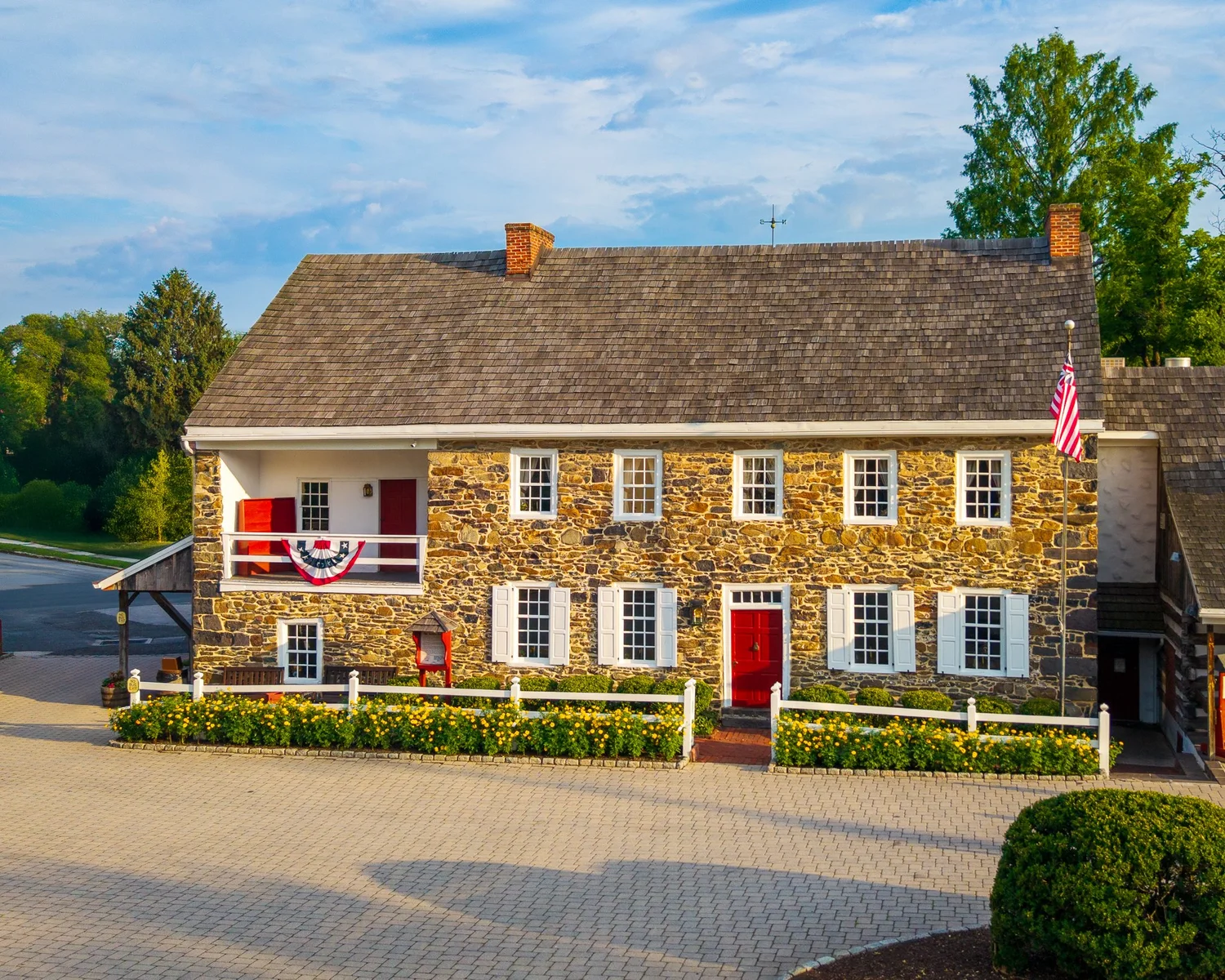
Built by Rev. Alexander Dobbin in 1776, the year the Declaration of Independence was adopted, the Dobbin House is as old as America itself! Today it is the area's most unique colonial dining experience.
250 Years in Gettysburg
- 1774Rev. Alexander Dobbin buys about 300 acres
- 1776The stone house is finished. Consecrated August 26, 1776
- 1786James Gettys offers the first town lots
- 1787Dobbin writes "Gettys Town" on a wedding certificate
- 1800Adams County is formed with Gettysburg as its seat
- 1809The Reverend dies. His son Matthew takes the house
- 1863The 55th Ohio holds the house in July. Lincoln passes in November
- 1941John Lippy turns the house into a museum
- 1976The current owner buys the house and restores it
- 1984A ballroom addition joins the house
- 2026The Dobbin House turns 250
Evenly spaced, not to scale. The large dot marks 1976, when the current owner bought the house.
The Reverend
Alexander Dobbin came from Ireland and studied at the University of Edinburgh and the University of Glasgow. He and his first wife, Isabella, married just a week before they sailed for America. Many of the settlers around here were Scots-Irish Presbyterians who had come to Pennsylvania for cheap land and the freedom to worship as they chose, and when they called for a minister, Dobbin answered. He became pastor of Rock Creek Presbyterian Church, north of what is now Gettysburg.
He was a teacher too. His classical school, part seminary and part college, is described as the first of its kind west of the Susquehanna River. When Adams County was carved out of York County in 1800, he helped lead the effort and was one of two commissioners who chose Gettysburg as the county seat.
Gettys Town
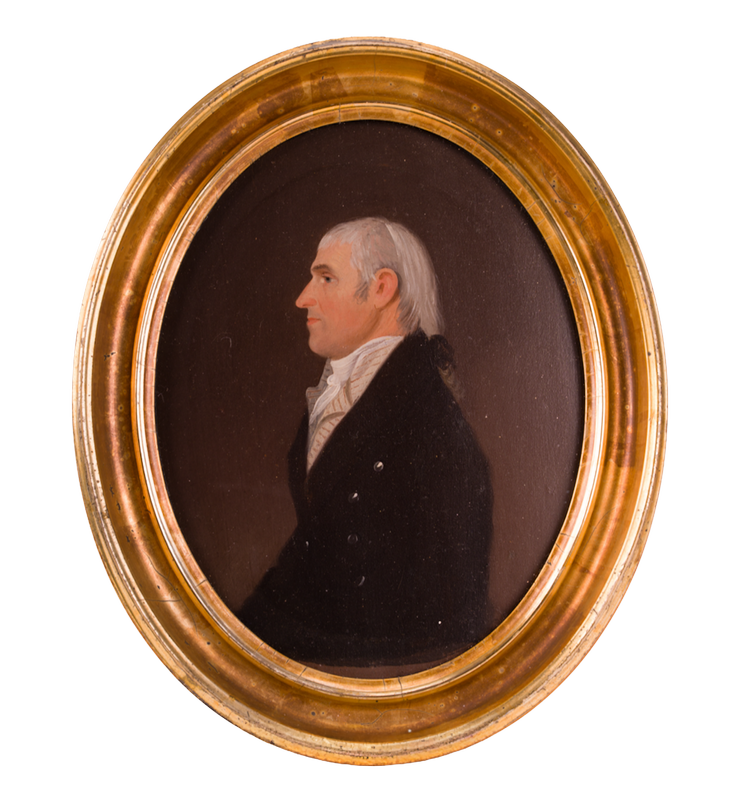
When Dobbin filled out a state certificate for a wedding he performed in 1787, he wrote "Gettys Town" as the location. The Dobbin House says it is the first time anyone put that name on paper, and that he took it from his friend and neighbor James Gettys, who kept a tavern nearby and had offered the first town lots the year before. Taverns were where people went for news, so a minister and a tavern keeper had plenty to talk about.
The House
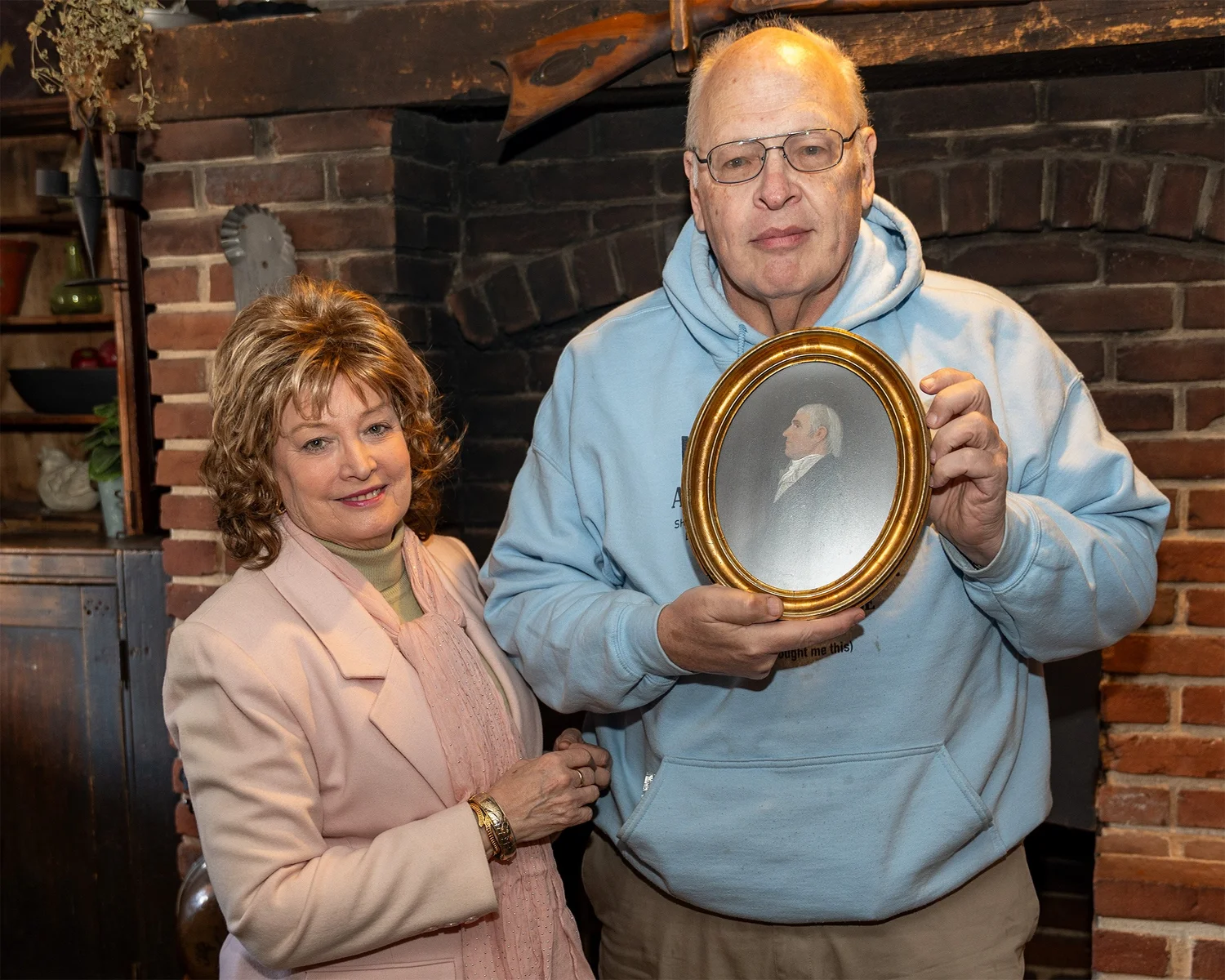
Dobbin bought about 300 acres in 1774 and built a farm and a stone house, finished in 1776. It was the family home and the school. Today it is the oldest standing building in Gettysburg. The house sits over a good spring, which gave the family water indoors, a real luxury then. You can still see the spring in the cellar today, and it runs so well that a sump pump with a backup generator keeps it from flooding the basement.
Isabella bore him ten children before she died. Dobbin then married Mary Agnew, a widow from his congregation, who moved in with her nine children. That made for a very full house.
The Hidden Room
When Rev. Dobbin died in 1809, the house passed to his oldest son, Matthew, an ardent abolitionist who wanted it to serve as a station on the Underground Railroad. According to the Dobbin House, he built an addition with a crawl space about three feet high between the first and second floors. The way in is a cupboard whose shelf, loaded with kitchen items, slides back on rails. People escaping slavery hid there when bounty hunters came by, since Maryland is close, and at night Matthew let them out and pointed them toward the next safe house. The Dobbin House puts this at 20 to 30 years.
The Battle of Gettysburg
Later owners rented the house out, which is why so much of the woodwork and walls are original. In 1863 the tenants were John and Alvira Ziegler. John was away with the Union Army, so Alvira was left with the farm and five children when the fighting began a mile away on July 1. On July 2, Union soldiers of the 55th Ohio held the house, lost it to a Confederate attack, and took it back with volunteers. It stayed in Union hands for the rest of the battle, in a no man's land between the Confederate held town and Union lines on Cemetery Ridge.
In November, President Lincoln's route from the square to the National Cemetery went right past the front of the house, which sits only a few hundred yards from the cemetery. The Dobbin House website also says the house served as a hospital after the battle, caring for wounded from both armies.to confirm
Where Rev. Dobbin Rests
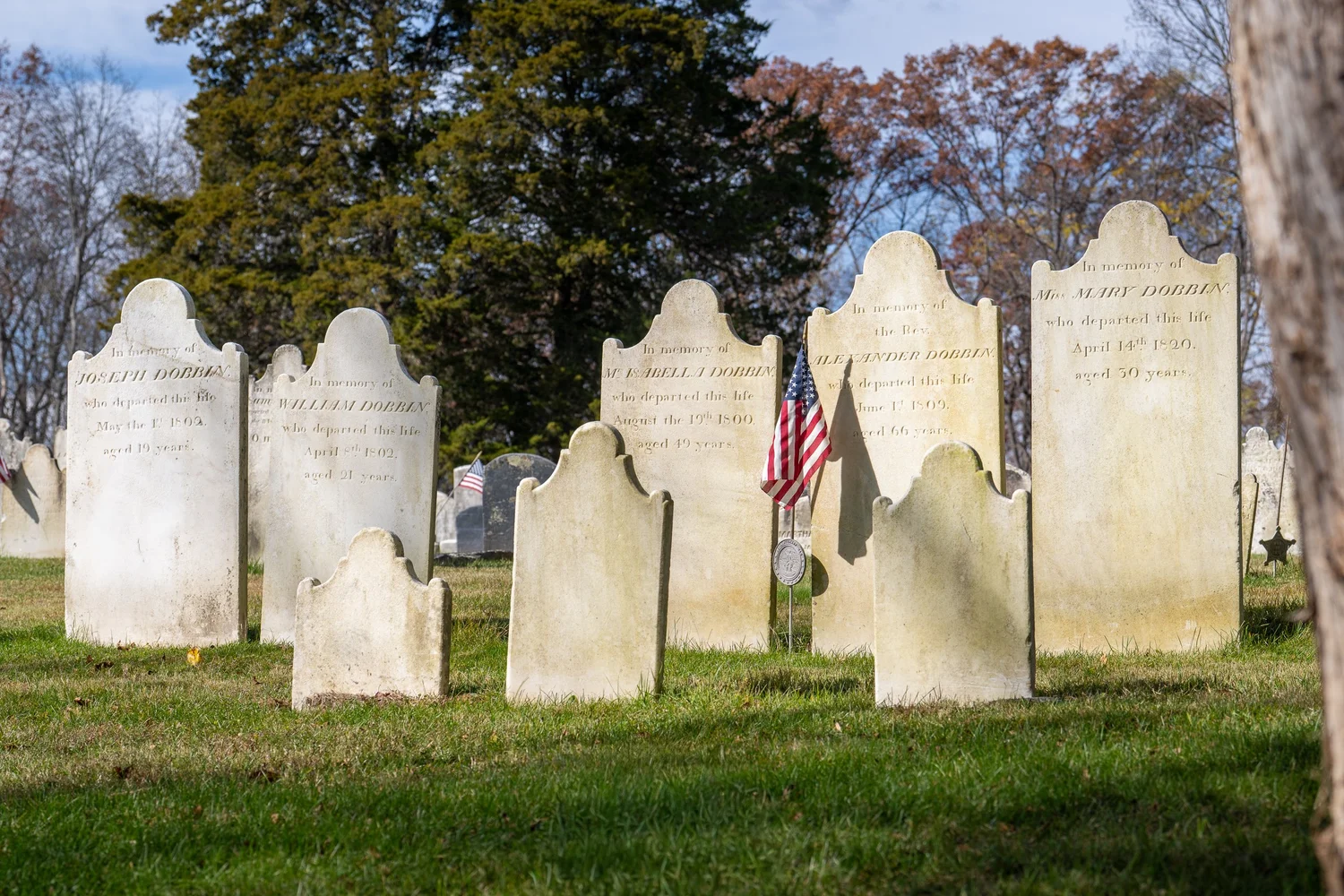
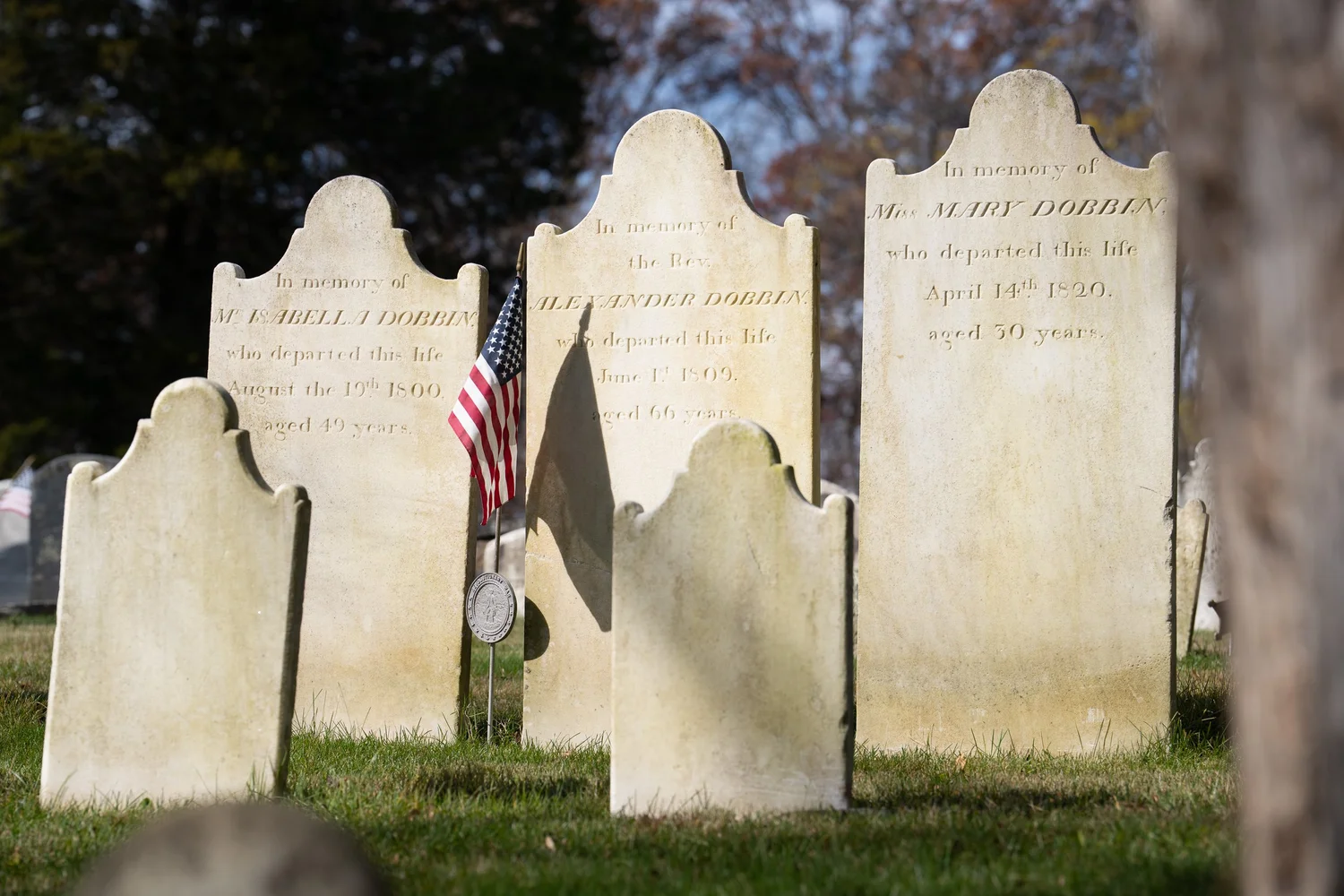
Alexander Dobbin died on June 1, 1809, at the age of 66. He is buried at Lower Marsh Creek Presbyterian Church, in the cemetery off Knoxlyn Road west of Gettysburg. Starting in 1785 he had divided his time as pastor between that congregation and Rock Creek.
His stone stands in a row of Dobbin stones. Isabella, his first wife, died in 1800 at 49. William and Joseph died within a month of each other in the spring of 1802, at 21 and 19, and Mary died in 1820 at 30. The stones do not say how they were related to him, but they are believed to be his children.
Restoration
Today the house is a colonial style tavern. Its restoration brought back the native stone walls, seven fireplaces and hand carved woodwork, with 18th century decor. Many of the furnishings match the inventory of Rev. Dobbin's estate, and the china and flatware match fragments found when the cellar was dug out again. The 17 foot hand carved chestnut bar in the Tavern dates to the early 1800s, and the owner discovered it was built by her own great-great-great-grandfather.
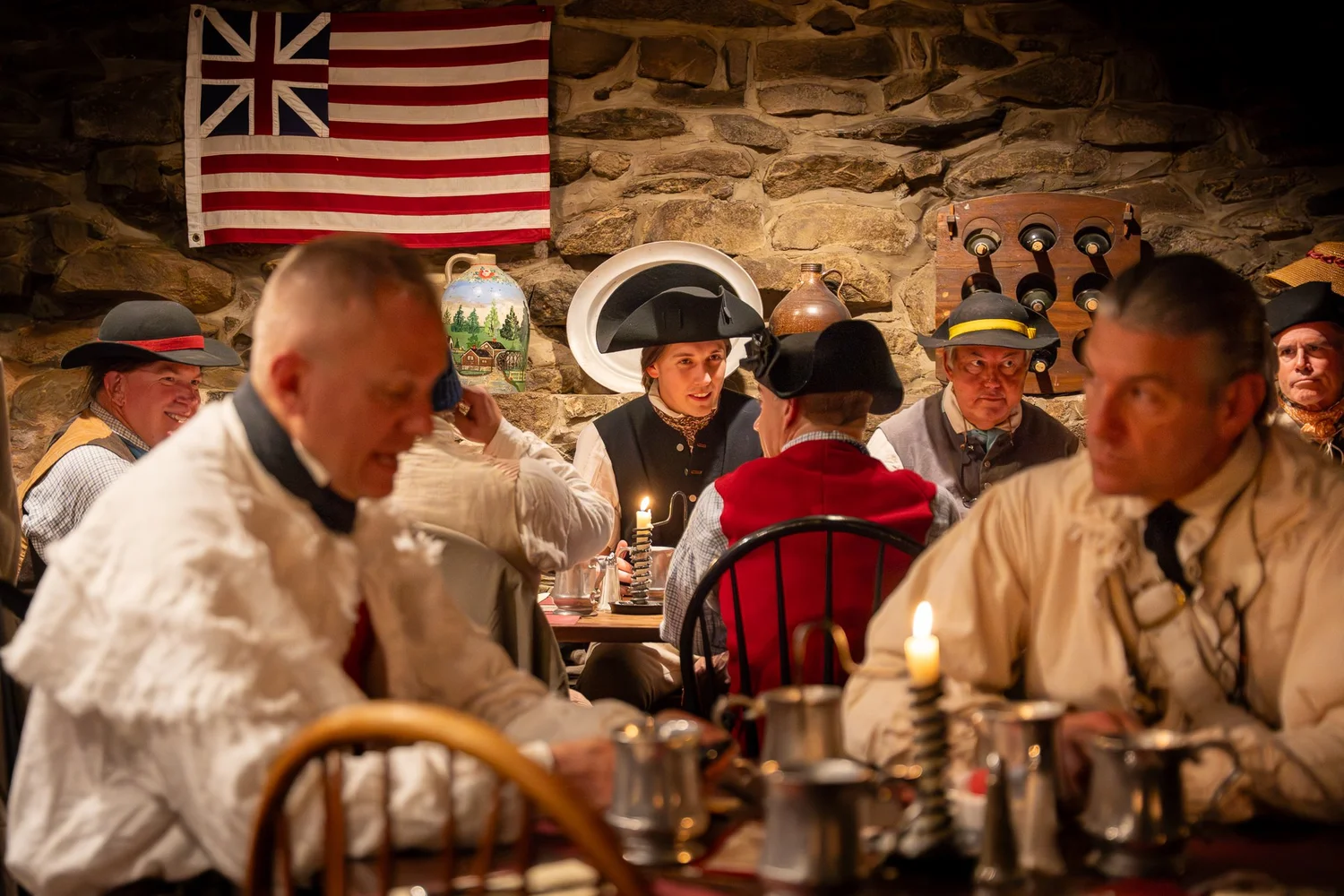
Lunch is served in the Tavern and dinner throughout the house, including the third floor, where recreated tester beds are the most requested tables. The house is listed on the National Register of Historic Places and is a Pennsylvania Registered Historic Landmark.
History adapted from the Dobbin House website and an American Battlefield Trust interview with the owner. Photography by Gettysburg Images